FREE ASSESSMENT
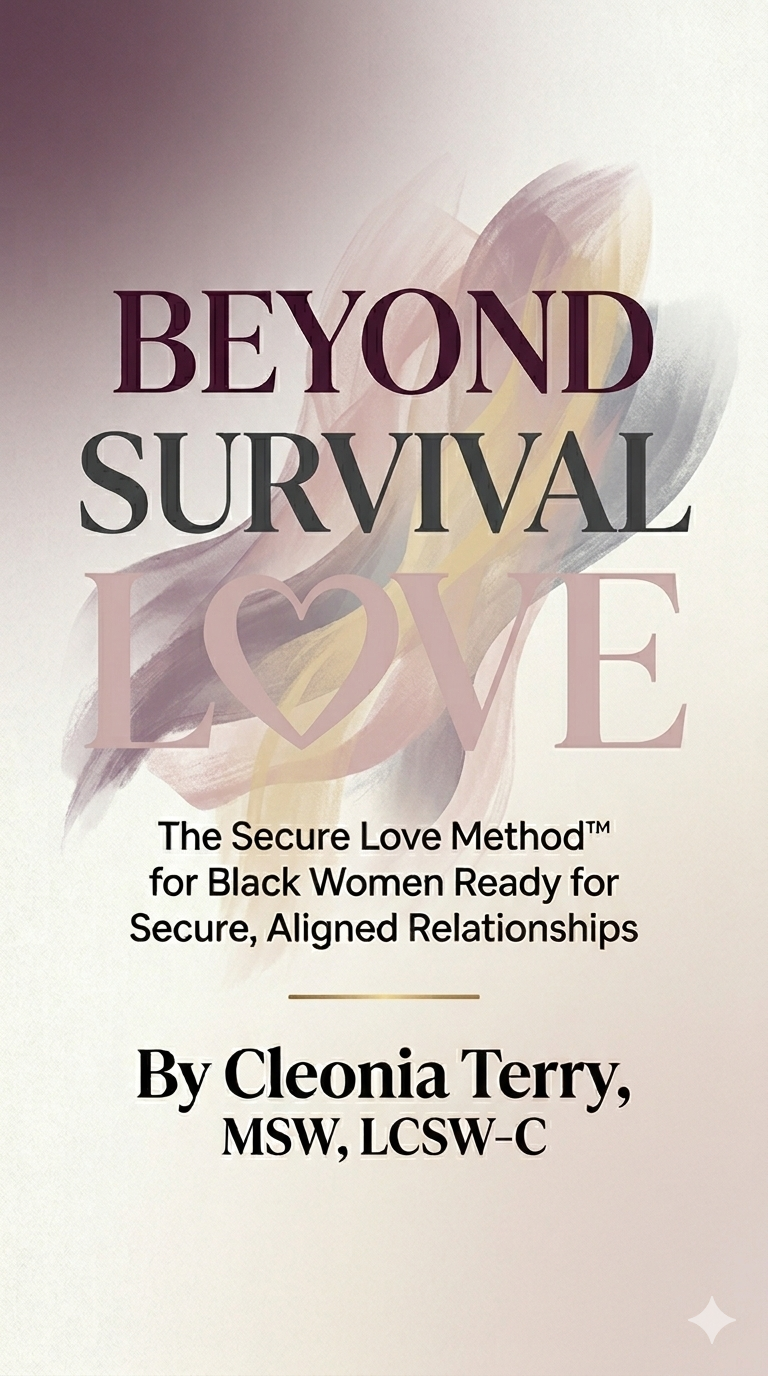
Beyond
CLEONIA TERRY, MSW, LCSW-C
SURVIVAL
Love
For Black Women Ready for Secure, Aligned Relationships
THE SECURE LOVE METHOD™
“Some women endure love so well that no one notices it is costing them.”
CLINICIAN · AUTHOR · THERAPISTTHIS BOOK IS FOR YOU
You may feel like something in your relationships isn’t working - even if you can’t fully explain why.
You might find yourself repeating the same experiences, wanting something different, but not knowing how to get there.
Maybe you’ve tried to make sense of it. Maybe you haven’t had the language for it yet. Either way - you know there’s more for you.
More clarity. More peace.
More connection that doesn’t cost you yourself.
Beyond Survival Love was written for that moment - the moment you decide you’re ready for something different.
Not because you have it all figured out. But because you’re open to learning, growing, and experiencing love in a new way.
THE FRAMEWORK
What Is
Survival Love?
Survival Love is not a failure. It is an intelligent adaptation — the relational strategies developed, often in childhood, to stay connected in environments where full authenticity felt risky or impossible.
For high-achieving Black women, those strategies are reinforced by cultural narratives that equate strength with self-sufficiency, endurance with grace, and caretaking with love. The result is a woman who is competent in every area of her life — and exhausted in her most intimate ones.
The Over-Functioner
Core fear: being dispensable
The Vigilant Self-Silencer
Core fear: being too much
The Intensity Seeker
Core fear: that security and aliveness are incompatible
The Avoidant Hyperindependent
Core fear: need itself
The Fawn & Accommodate
Core fear: the authentic self is too much
FREE ASSESSMENT
Discover Your
Survival Love Pattern
Five minutes. Seven questions. A personalized result that names your primary pattern, explains its origins, and shows you what movement looks like for you specifically.
FREE · 3 MINUTES · INSTANT RESULTS
THE SECURE LOVE METHOD™
Five Phases From
Survival to Security
A structured, developmentally sequenced framework grounded in attachment science, Polyvagal Theory, and the specific cultural inheritance of Black women.
AWARENESS
Naming the pattern. Understanding its origins. Recognizing where it served you — and where it is now costing you more than it is worth.
REGULATION
Learning the difference between a nervous system response and a relational reality. Building capacity to stay present when intimacy triggers the pattern.
RECONNECTION
Returning to the self that was edited, suppressed, or lost inside the pattern. Establishing congruence between what is felt and what is expressed.
RELATIONAL ALIGNMENT
Identifying the selection patterns that Survival Love produces. Building the criteria and practices for recognizing genuine partnership.
SECURE EMBODIMENT
Living from security rather than strategy. Integration as a way of being — not a set of techniques, but a fundamentally different relationship to love itself.
THE BOOK
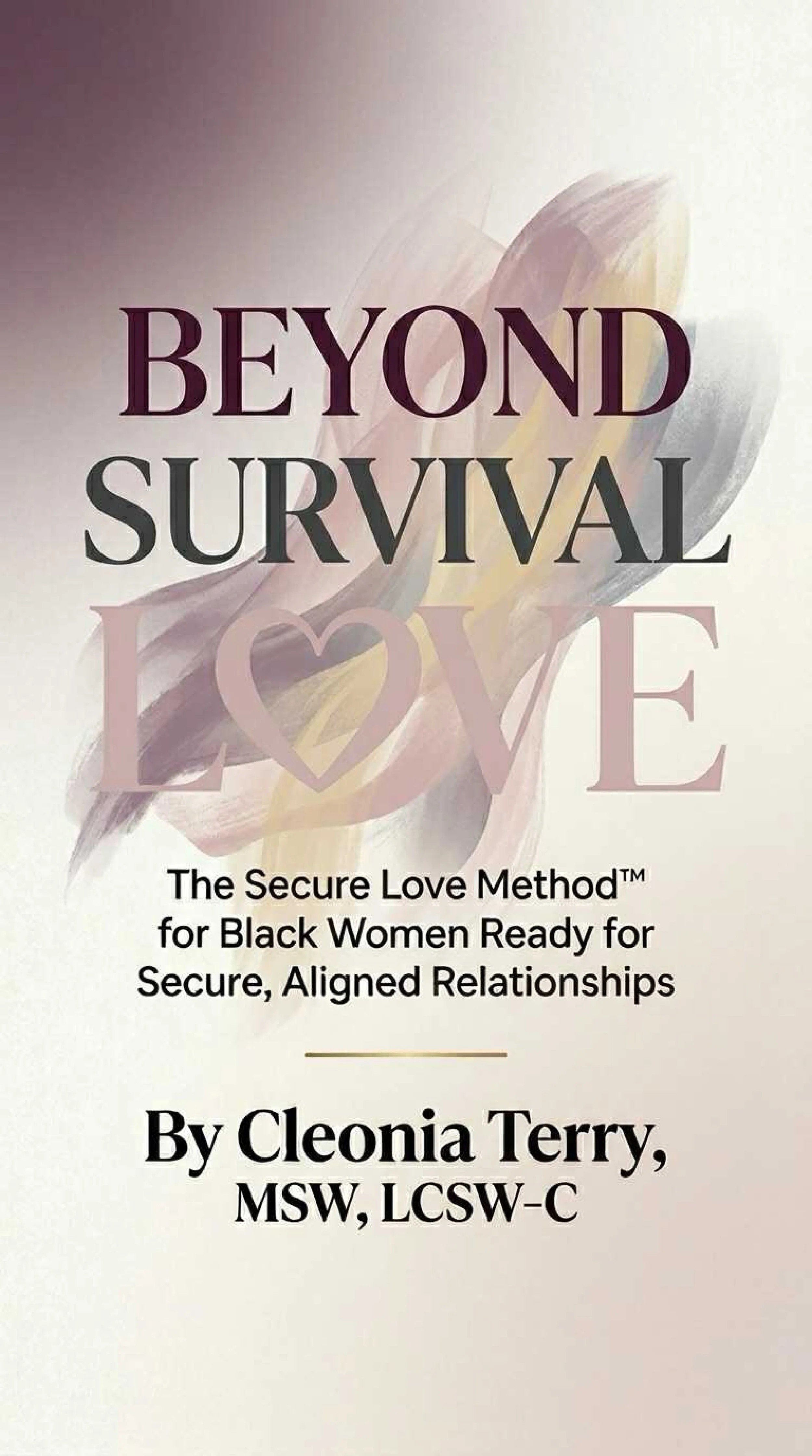
The Complete
Framework
Beyond Survival Love is the full clinical and cultural framework — the language, the history, the science, and the five-phase pathway from relational endurance to secure love. Written for the woman who already knows something is off and is ready to understand exactly what, and why.
Grounded in attachment theory, Polyvagal Theory, and the Strong Black Woman schema literature. Written with the directness and specificity that woman deserves.
FORMAT
Print & Digital
COMPANION
Workbook Available
THERAPY
Group & 1-on-1
EARLY READERS
What the Work Is Doing
“
This framework named something I have been trying to articulate for a decade. It is the most precise description of what I do in relationships that I have ever encountered.
— Early Reader
Therapist, 12 years in practice
“
I have read every attachment book available. This one addresses the specific gap between knowing your pattern and being able to leave it. That gap is where most of us actually live.
— Advance Reader
Executive, 41
“
The intergenerational chapter stopped me completely. I saw my mother, myself, and the script I had been carrying without ever choosing it. I had to set the book down and sit with that.
— Advance Reader
Attorney, 38
About the Author
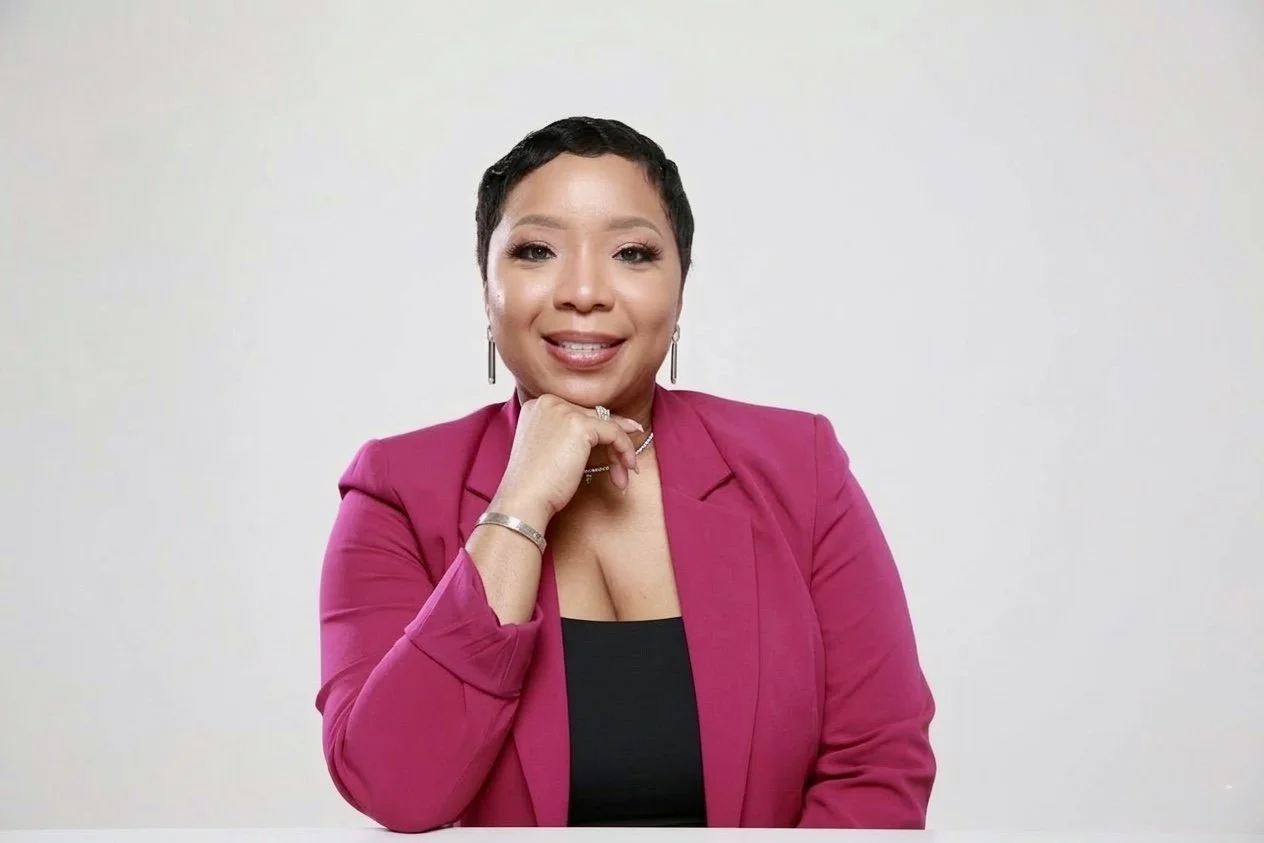
Cleonia Terry,
MSW, LCSW-C
I am a Licensed Clinical Social Worker, psychotherapist, and the founder of The Secure Love Method™ — a clinically grounded framework built specifically for Black women navigating complex relational patterns.
I bring both professional expertise and personal honesty to this work. I have been the woman who confused intensity for intimacy, and endurance for devotion. That learning is the origin of everything I teach.
The Secure Love Method™ was not developed in abstraction. It was forged at the intersection of attachment theory, nervous system research, and the specific cultural realities of Black women — in the spaces between a clinical session and a personal reckoning.
- Licensed Clinical Social Worker — Maryland (LCSW-C)
- CEO, Family Focus Therapy
- Founder, The Secure Love Method™
- Author, Beyond Survival Love
Ready to Begin
This Is Not About
Finding the Right Person.
It is about becoming the version of yourself who can recognize them, receive them, and stay — without losing yourself in the process. The Beyond Survival Love Group Therapy Program is available as 1-on-1 private therapy (6 months) or as a 12-week group cohort.